
Swedish MedTech Production in Focus as Vulnerability Increases.
Did you find your way here via the article in Dagens Industri, or from our LinkedIn post highlighting the interview? Then you’ve already had a glimpse of how we at Cetro Medical view the future of medical device manufacturing.
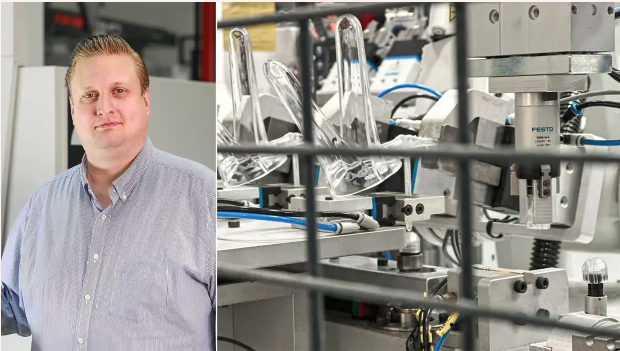
Geopolitical uncertainty and fragile supply chains have brought renewed attention to where medical technology is manufactured. For the Swedish company Cetro Medical, local production is not just a matter of cost, it is a strategic necessity.
– The biggest lesson of recent years is that we are more vulnerable than we thought, says CEO Carlos Wilhelmsson.
The Småland-based company Cetro Medical builds its operations around plastic injection moulding and the manufacturing of single-use medical devices, including products used in gynaecology, obstetrics, and surgery-areas where the demands on quality and hygiene are exceptionally high.
Today, the company supplies multiple continents but has chosen to keep its production in Sweden. It has also long worked to reduce dependence on global sourcing, relying primarily on European suppliers of raw materials.
– We have had a strategy not to depend on purchases from Asia, precisely to reduce vulnerability, says Carlos Wilhelmsson.
Cetro Medical continues to invest in Sweden
This has proven to be a wise decision. Recent disruptions in global supply chains have changed perceptions of globalisation. The pandemic, a cargo ship grounding in the Suez Canal, and disruptions in the Strait of Hormuz are just a few examples. These events have increased awareness of where critical products should be manufactured.
As a result, Cetro Medical is now investing further in strengthening its Swedish production.
– We are expanding in Smålandsstenar with larger cleanrooms and increased production capacity. This is driven both by our own growth and by a more uncertain world, where customers are increasingly seeking European suppliers, he says.
However, this is not only a matter of supply security, but also of innovation and quality. In an industry governed by strict regulations, proximity between development and production becomes a key competitive advantage.
– Local production provides better control, quality, and flexibility. When people feel engaged and proud of their work, they also want to do things right. The result is better, he says.
Gaps in national capacity
Despite strong Swedish clusters in medtech and pharmaceuticals, Carlos Wilhelmsson points to clear gaps in national capabilities. Today, for example, there is a lack of ethylene oxide sterilisation facilities required for certain sensitive medical devices.
– This means we have to send products abroad. It creates unnecessary transport and increases vulnerability, he says.
He sees this as a strategic issue for Sweden that needs to be addressed.
– This should be a matter of national security. Ensuring such capacity in Sweden would strengthen both healthcare and industry, he says.
As the demands for resilient supply chains increase, the question of where production takes place is becoming increasingly central—especially in medical technology.
– It is no longer just about cost. It is about control, quality, and long-term supply security, Carlos Wilhelmsson concludes.
About Cetro Medical
Cetro Medical AB is a Swedish medtech company with its own production in Smålandsstenar. Founded in the 1960s, the company develops and manufactures healthcare products with a focus on quality, delivery reliability, and long-term sustainability. Cetro supplies customers globally, primarily in Europe and the United Kingdom.